American Meadows Experts Share How to Create a Naturalizing Bulb Lawn for Early Spring Color
Crocus, mini daffodils, and other naturalizing bulbs planted in turf this fall bring early spring color and some of the
Press Release Disclaimer: This is a press release distributed through the XPR Media network. It has not been independently verified by our newsroom.
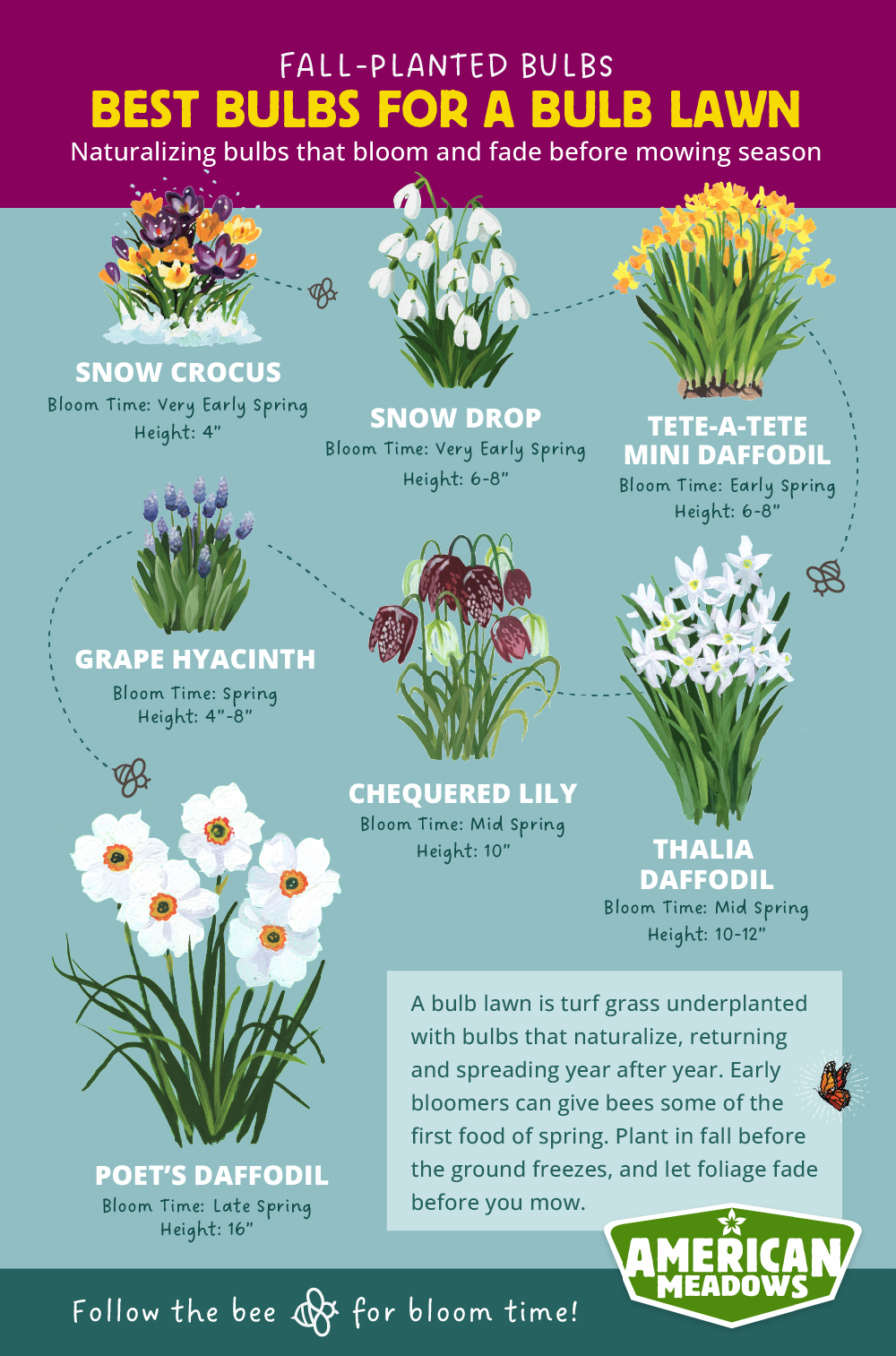

Crocus, mini daffodils, and other naturalizing bulbs planted in turf this fall bring early spring color and some of the first food for pollinators in spring.
SHELBURNE, VT, UNITED STATES, October 13, 2026 /EINPresswire.com/ — Naturalizing spring-flowering bulbs in existing turf creates a bulb lawn, bringing early-season color to grass before regular mowing begins. American Meadows Master Gardener Tabar Gifford and Perennial and Bulb Expert Megan Foster recommend choosing early-flowering bulbs that can naturalize over time, including crocus, snowdrops and miniature daffodils. Their guidance covers bulb selection, natural-looking planting techniques, regional planting windows and post-bloom care for gardeners planning a bulb lawn.
American Meadows’ Bulb Lawn Planting Guide provides additional information for gardeners planning ahead this fall.
WHAT IS A BULB LAWN
A bulb lawn is an area of existing turf planted with spring-flowering bulbs that can naturalize, returning and gradually spreading over time in suitable conditions. Unlike a traditional bulb bed, bulbs grow directly in the grass, creating a seasonal display before the lawn reaches its main growing and mowing season.
The approach has historical roots in the Dutch tradition of stinzenplanten, spring-flowering plants, many of them bulbs, naturalized for generations on the grounds of historic estates.
“Here in Vermont, after a long winter, these bulbs are some of the very first signs that spring has arrived. I love seeing that first color come up before the grass has even started to green. It feels like the landscape outside is finally waking back up and bringing a little joy and renewal with it. They’re also some of the first food for bees coming out of winter,” said Tabar Gifford, Master Gardener and Partnership Cultivator at American Meadows.
WHY PLANT A BULB LAWN
Bulb lawns bring color to the landscape before many perennials begin to bloom. Early-flowering bulbs can also provide pollen and nectar for bees and other pollinators when relatively few flowers are available.
American Meadows recommends bulb lawns because they:
• Can return year after year. Suitable naturalizing bulbs can return and multiply over time, with relatively little maintenance once established.
• Share space with grass. Bulbs bloom and fade before regular mowing begins, then recharge underground while the lawn takes over.
• Can grow in phases. Gardeners can start with one drift and add more each fall.
WHAT MAKES A GOOD BULB FOR A LAWN
According to American Meadows, the best bulbs for a lawn share three traits: they stay relatively small, bloom early, and naturalize. Petite plants mingle easily with grass, while early bloomers give their foliage more time to finish before the first mow. Depending on the species, naturalizing bulbs spread through offsets, which are the small new bulbs that form beside the parent bulb, or by self-seeding.
Many large-flowered hybrid tulips are generally better suited to traditional beds, where gardeners can provide the care they may need to flower well in subsequent years. Some species or botanical tulips are better candidates for naturalizing because they are smaller in size and may persist and return in suitable conditions.
EXPERT PICKS FOR A NATURALIZING BULB LAWN
Using these criteria, American Meadows Master Gardener Tabar Gifford and Perennial and Bulb Expert Megan Foster recommend:
• Crocus: Often among the first flowers to appear in a bulb lawn. Their open, cup-shaped blooms can make pollen accessible to early pollinators.
• Snowdrops (Galanthus): Among the earliest spring bloomers, these delicate flowers can develop into larger colonies over time in suitable conditions.
• Tête-à-Tête miniature daffodils: Compact and early blooming, they often finish flowering early enough for their foliage to fade before regular lawn mowing begins.
• Grape hyacinth (Muscari armeniacum): Closely set blue flowers that can be scattered through turf for a natural-looking effect.
• Species or botanical tulips: Smaller varieties, such as Persian Pearl, can be candidates for naturalizing where growing conditions suit them.
• Thalia daffodils: Elegant, nodding white flowers with a sweet fragrance. Each stem can produce multiple blooms, creating a soft, natural-looking display.
• Poet’s daffodil ‘Actaea’: White petals surround a yellow cup edged in red. This later-blooming daffodil can suit areas that can remain unmowed a little longer.
• Chequered lily (Fritillaria meleagris): Fine, slender foliage blends naturally into lawns. It prefers soil that stays moist but is not waterlogged.
Planting a mix of early-, mid- and late-spring bloomers can extend the display. Gardeners should account for the different bloom times and allow enough time for foliage to finish before mowing.
HOW TO PLANT A NATURAL-LOOKING DRIFT
In a bulb lawn, loose drifts help spring-flowering bulbs look naturalized rather than planted in rows or grids.
“For a drift to feel natural, loosely lay out your bulbs along an arc of varying width,” said Megan Foster, Perennial and Bulb Expert at American Meadows. “Resist the temptation to arrange the bulbs in a long thin line. A little density goes a long way.”
American Meadows recommends these steps:
1. Lay out the shape. Set a garden hose in a loose curve where the drift should flow, then gently toss bulbs into the curve, fuller in the middle and tapering at the ends.
2. Plant at the right depth. Follow the package instructions for each bulb. If they are not available, a general rule of thumb is to plant about three times as deep as the bulb is wide, with the pointed end facing up.
3. Plug or trench. For individual bulbs, cut small plugs of turf with a trowel, bulb planter or suitable drill attachment, set the bulb, replace the turf and water well. For larger areas, lift the turf in chunks, remove soil to the needed depth, set the bulbs point-side up, then replace the soil and turf.
4. Plant generously. Groups of bulbs create a stronger display in the first spring. Follow the recommended spacing for each variety, and remember that naturalizing bulbs may take several seasons to form larger colonies.
WHEN TO PLANT A BULB LAWN
Spring-flowering bulbs are generally planted in fall so they can establish roots before winter. Bulbs that require a period of cold also need suitable winter conditions to flower successfully. The ideal planting window varies by climate, bulb type and local conditions.
American Meadows offers this general timing guidance:
• Cold climates (Zones 3–6): Plant in September and October, before the ground freezes. If the ground is still workable, planting may still be possible later in fall.
• Mild climates (Zones 7–8): Plant in October and November.
• Warm climates (Zones 9–10): Choose bulbs suited to the local climate. Some spring-flowering bulbs require pre-chilling before planting; follow the instructions for the specific variety.
Gardeners can consult the Bulb Lawn Planting Guide for additional guidance, including a USDA hardiness zone map and advice for late-season planting.
AFTER THE BLOOM: WHEN TO MOW
After flowering, bulb foliage continues gathering sunlight and storing energy in the bulb for the following season. American Meadows recommends leaving foliage in place until it yellows and dies back naturally before mowing that area.
Gardeners can maintain a tidier appearance by mowing around bulb patches during the first mow or two of spring, leaving the patches themselves until their foliage has finished.
Choosing a location with well-draining soil, no standing water and room to delay mowing for a few weeks in spring helps support a successful bulb lawn. Avoiding pesticides and weed-and-feed products in planted areas also helps protect the pollinators that may use the flowers.
START SMALL AND EXPAND
A bulb lawn does not have to happen all at once. A single drift under a deciduous tree, where bulbs can take advantage of spring sunlight before the leaves fill in, or along a walkway can be an easy starting point. Gardeners can add new areas each fall, gradually expanding the display without converting an entire lawn at once.
For many gardeners, a bulb lawn can also be a first step toward reducing lawn area. Patches left unmowed while bulb foliage finishes can become the beginning of a larger meadow or planting bed, a gradual approach that aligns with Reduce Your Lawn Day, the annual May 20 event American Meadows helped launch in 2024.
RESOURCES FOR PLANTING A BULB LAWN
• Bulb Lawn Planting Guide: https://www.americanmeadows.com/blogs/flower-bulbs/how-to-plant-a-bulb-lawn
• How To Naturalize Daffodils & Fall Bulbs: https://www.americanmeadows.com/blogs/flower-bulbs/how-to-naturalize-daffodils
• Fall Planted Bulb Learning Center: https://www.americanmeadows.com/blogs/flower-bulbs/tagged/fall-planting
ABOUT AMERICAN MEADOWS
American Meadows is Doing Good Through Gardening. Its wildflower seed mixes, pre-planned perennial gardens, and lawn alternatives have helped gardeners create more beautiful and ecologically beneficial landscapes for more than 40 years. American Meadows provides seeds, plants, gardening resources and expert guidance to gardeners across the United States. Learn more at https://www.americanmeadows.com/
Tabar Gifford
American Meadows Inc
ltabar@americanmeadows.com
Visit us on social media:
Instagram
TikTok
YouTube
Facebook
LinkedIn
Bluesky
How to Create a Bulb Lawn: Naturalizing Spring-Flowering Bulbs in Grass | American Meadows
Legal Disclaimer:
EIN Presswire provides this news content “as is” without warranty of any kind. We do not accept any responsibility or liability
for the accuracy, content, images, videos, licenses, completeness, legality, or reliability of the information contained in this
article. If you have any complaints or copyright issues related to this article, kindly contact the author above.

Media gallery